The Eva team
Your AI general manager
Learning how to start a cleaning business is one of the most practical moves you can make in 2026. The startup costs are low (see our 2026 cleaning business startup costs and profit report for the real numbers), demand for residential cleaning is steady, and you can be earning within weeks rather than months. This guide walks through the real steps in order: deciding what you offer, the legal and money setup, landing your first clients, and the tools that keep the work from swallowing your whole week. None of it requires experience or a big bankroll to begin.
The opportunity is real and measurable. Cleaning is one of the largest service occupations in the country: the Bureau of Labor Statistics counts millions of Americans working in cleaning occupations, with hundreds of thousands of openings projected every year. And the bar to stand out is lower than it looks: our analysis of 25,000+ US cleaning businesses found that roughly 1 in 5 still has no website at all, which means a new owner who takes booking, reviews, and online presence seriously starts ahead of a big slice of the incumbents.
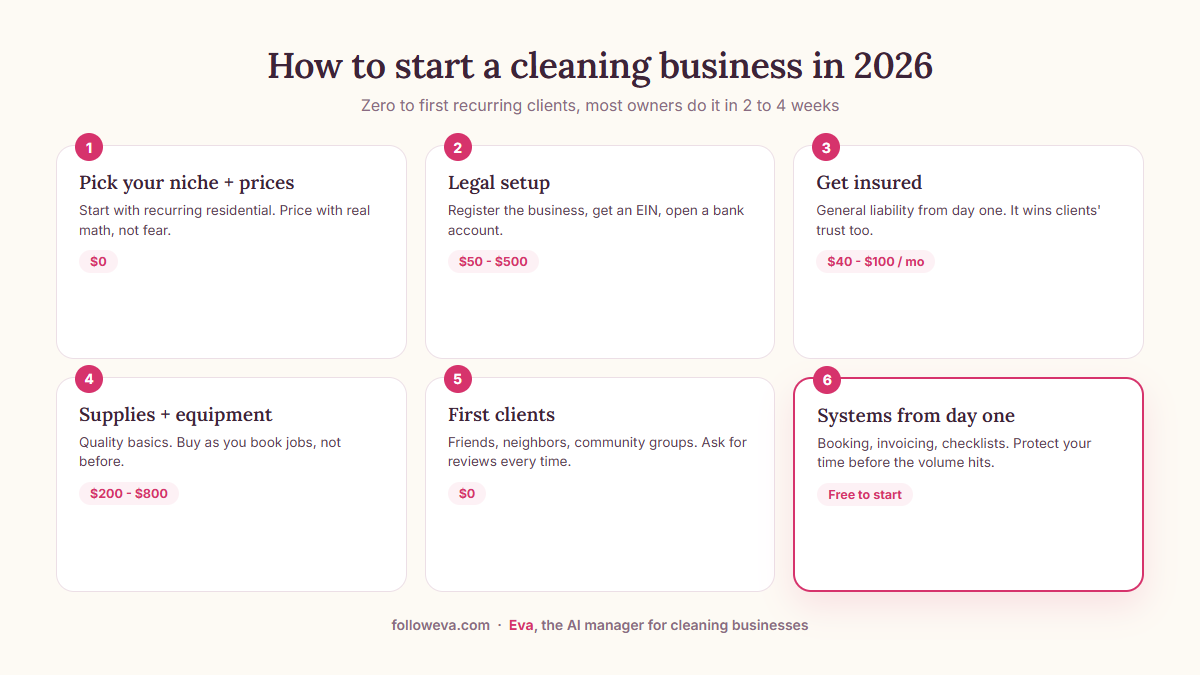
The startup checklist at a glance
| Step | What to do | Typical cost |
|---|---|---|
| 1. Niche + pricing | Pick residential recurring to start; set prices with real math | $0 |
| 2. Legal setup | Register the business, get an EIN, open a bank account | $50 - $500 by state |
| 3. Insurance | General liability; workers comp once you hire | $40 - $100 / month |
| 4. Supplies + equipment | Quality basics; buy as you book, not before | $200 - $800 |
| 5. First clients | Friends, neighbors, community groups, referrals | $0 |
| 6. Systems | Booking, invoicing, checklists from day one | Free to start |
Is starting a cleaning business worth it?
For most people, yes. Cleaning has a low barrier to entry, you do not need a degree or a storefront, and a single recurring client can be worth thousands of dollars a year. The work is consistent because homes get dirty on a schedule, which means predictable repeat revenue once you build a book of regulars. The catch is that it is a real business, not just cleaning. The owners who struggle are usually buried in scheduling, client texts, and chasing payments, not in the actual cleaning. Knowing that going in lets you set things up the right way from day one. If you prefer a structured course format, the free Eva Academy series on starting a cleaning business covers every step below in depth, including choosing your legal structure and franchise vs independent.
Step 1: Pick your niche and set your prices
Decide who you serve before you buy a single mop. These are all different businesses, with different clients and rhythms:
- Residential cleaning, one-off or occasional homes
- Recurring maid service, the same homes every week or two
- Move in / move out cleans, higher-effort and higher-ticket
- Commercial offices, a different sales cycle entirely
Most new owners start with residential because the sales cycle is short and referrals come quickly. Once you know your niche, pricing is the decision that makes or breaks your margins. Charge too little and you are exhausted and broke, charge well and you build a sustainable business. Our guides on how to price cleaning jobs and how much to charge for house cleaning walk through the numbers, and our free house cleaning price calculator gives you a fast starting estimate.
Step 2: Legal setup, licenses, and insurance
You can start simple and stay legal. The basics most solo cleaners set up:
- Register as a sole proprietor or LLC for liability protection.
- Register your business name with your state.
- Open a separate business bank account so personal and business money never mix.
- Check local rules for a business license or permits, which vary by state and city.
- Get general liability insurance, the one thing not to skip; many clients will not hire a cleaner without it.
This is the unglamorous part, but doing it early keeps you out of trouble and makes you look professional to clients.
Step 3: Land your first clients
Your first few clients usually come from people who already know you. Tell friends, family, and neighbors, post in local community groups, and ask every happy client for a referral and a review. A simple online booking page removes friction so people can hire you without a phone call, which matters more than new owners expect. As you grow, reviews and word of mouth become your best marketing channel. We cover the practical playbook in how to get cleaning clients, and a clean online booking and Client Hub experience makes it easy for new clients to say yes the moment they land on your page.
Step 4: The tools that keep it running
In the early days a notebook and your phone work fine. They stop working the moment you have more than a handful of recurring clients, because the admin starts to eat your evenings: confirming visits, sending reminders, juggling reschedules, and writing invoices. This is where most owners hit a ceiling. Good scheduling and dispatch keeps the calendar straight, and automated client messaging handles the texting that otherwise runs through you. Eva goes a step further as an AI general manager that runs that day to day work for you, so the business can grow without you working every night. You do not need it on day one, but it is worth knowing the ceiling exists before you hit it.
How to start a cleaning business with no money
You can genuinely start with very little:
- Buy basic supplies as you book your first jobs and reinvest the income, rather than stocking up before you have clients.
- Clean for friends and neighbors first to build reviews.
- Market for free in community groups and by word of mouth.
- Use free trials to test booking and scheduling before you spend a cent.
The biggest early investment is not money, it is your time, so protect it by setting up simple systems instead of doing everything by hand and burning out in month two.
Starting with no experience, and from home
You do not need professional experience to begin. Cleaning skill is learnable in a weekend, and what clients really pay for is reliability: showing up, doing a thorough job, and communicating well. Build a simple checklist for each clean so quality stays consistent, and you will quickly look like a pro. A cleaning business is also one of the easiest to run from home, since there is no office or retail space, just you, your supplies, and a system for managing clients and visits. Start small, keep your clients happy, and let referrals and steady systems do the growing. That is how a one person side hustle becomes a real, profitable cleaning business.
Starting a cleaning business: FAQ
How much does it cost to start a cleaning business?
A few hundred to about $2,000 for most solo starts: supplies, liability insurance, registration, and a simple way to take bookings and payments. No office, warehouse, or fleet needed. Our 2026 startup costs report breaks down real budgets line by line.
Do I need a license to start a cleaning business?
Usually a standard business registration or license from your city or state rather than a special cleaning credential. Requirements vary by location, so check your state and county rules. What clients and commercial buildings actually ask for is proof of insurance: our cleaning business insurance guide covers what to carry and what it costs.
Can I start a cleaning business with no money?
Realistically, yes. Clean for friends and neighbors first to earn reviews, buy supplies as you book jobs, market free in community groups, and write your plan on one page with our cleaning business plan outline. Your time, not money, is the real early investment.
How much can a new cleaning business make in the first year?
A full-time solo cleaner typically reaches $50,000 to $90,000 in revenue once the schedule fills, often within the first year, and keeps most of it. The pace depends on pricing discipline and referrals more than on marketing spend: see is a cleaning business profitable.