The Eva team
Your AI general manager
Learning how to start a cleaning business is less complicated than most people fear and a lot more doable than the internet makes it sound. You do not need a loan, an office, or a fancy van. You need a clear niche, a legal structure, a way to quote and book, basic insurance, and a handful of first clients who trust you. This guide walks you through the whole thing from idea to your first paid clean, in the order that actually works.
Step 1: Decide who you clean for
Before anything else, pick a lane. Trying to clean everything for everyone is the fastest way to compete on price and burn out. Residential is the easiest entry point: steady demand, recurring clients, and homeowners who pay quickly. Airbnb turnovers reward speed and reliability. Offices and light commercial pay on contract but expect evening work. Post-construction is hard, dirty, and the best paid per hour.
Pick one to start. You can always add a second later. If you are torn, read our breakdown of which niche to choose before you commit.
Step 2: Make it a real business
You can technically start as a sole proprietor and earn money tomorrow, but most cleaning owners move to an LLC quickly because it separates your personal savings from a slip-and-fall claim. It costs roughly 50 to 500 dollars to file depending on your state, and it makes you look legitimate to commercial clients. We compare the options in which legal structure to choose.
While you are at it, get an EIN from the IRS (it is free), check whether your city or county requires a basic business license, and pick a name. If you are stuck on naming, our cleaning business name generator will get you unstuck in a couple of minutes.
Step 3: Buy only what you need to start
The single biggest startup mistake is overbuying. You do not need a truck full of machines to clean a three-bedroom house. A solid starter kit runs a few hundred dollars: microfiber cloths, a good vacuum, mop and bucket, a caddy, and reliable all-purpose, glass, bathroom, and floor products. That is it. Our guide to essential equipment and products lists exactly what to get and what to skip.
- A reliable vacuum (this is where to spend, not save)
- Microfiber cloths in a few colors to avoid cross-contamination
- All-purpose, glass, bathroom, and floor cleaners
- A sturdy caddy so you can move room to room fast
- Gloves, a few sizes, and a stack of trash bags
Step 4: Protect yourself and look the part
General liability insurance is the one thing you should not skip. It is often 40 to 80 dollars a month for a solo cleaner, and it covers the broken vase or the scratched floor that could otherwise wipe out your profit for the year. Many clients, and almost every office, will ask if you are insured and bonded before they let you in. We cover what you actually need in insurance and liability.
Step 5: Set a price you can defend
Most new cleaners undercharge out of fear, then resent the work. Price on time, not just on square footage. A standard residential clean often lands between 25 and 45 dollars an hour of your billed time, more for deep cleans and move-outs. Build your number from your costs, your area, and the value of the result, then hold the line. Run a few scenarios through our free house cleaning price calculator so your first quotes are not guesses.
Step 6: Find your first clients
You do not need an ad budget to get started. Your first clients usually come from people who already know you and from your immediate neighborhood. Here is the fastest path:
- Tell everyone you know, plainly, that you are taking cleaning clients
- Post in local Facebook groups, Nextdoor, and neighborhood apps
- Set up a free Google Business Profile so you show up in local search
- Offer your first three clients a small intro discount in exchange for a review
- Ask every happy client for one referral, every time
Then deliver one clean so good they cannot help but talk about you. Word of mouth is the cheapest marketing in this business, and it compounds. When you are ready to grow past your first handful, our guide on landing your first 5 contracts takes it from here.
Step 7: Quote, book, and get paid without the chaos
The work that quietly sinks new owners is not the cleaning, it is the back office. Replying to leads at midnight, juggling a paper calendar, chasing the client who has not paid. Get a simple system in place from day one so admin never caps how many clients you can take.
Let Eva handle the back office
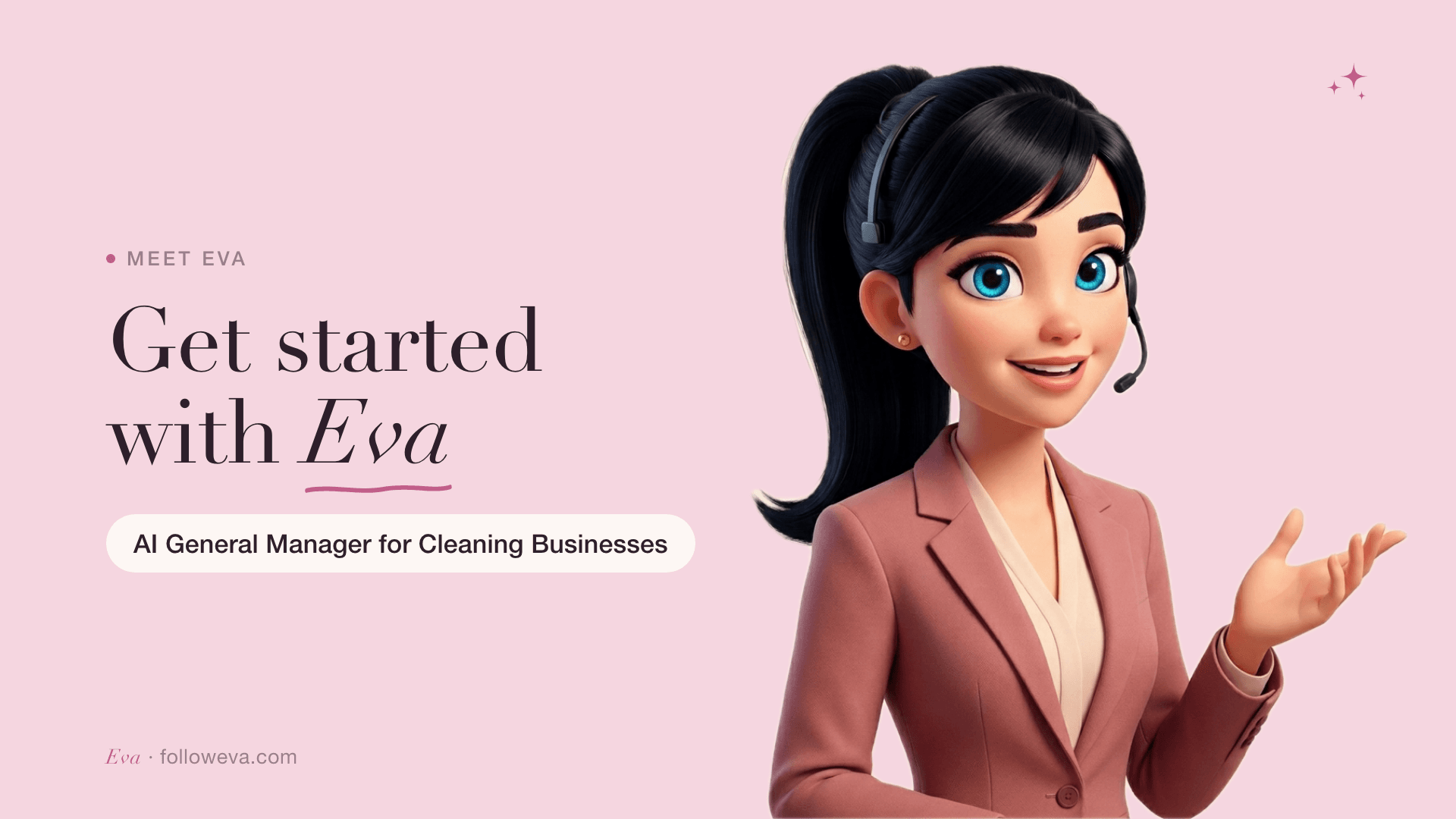
Once the cleaning starts, the texts, the scheduling, and the invoices pile up fast. Eva is the AI general manager built for cleaning owners like you. She quotes new leads in seconds, books the job, fills your schedule, sends reminders so clients do not no-show, invoices the moment you finish, and chases late payment for you. She even nudges happy clients for reviews. You stay on the work and the growth, she runs the rest. You can try Eva free and see your first week run itself.